Learn
The Two Words That Were Not on the Deed
By Luke A. Barry, Attorney · Last updated September 7, 2026
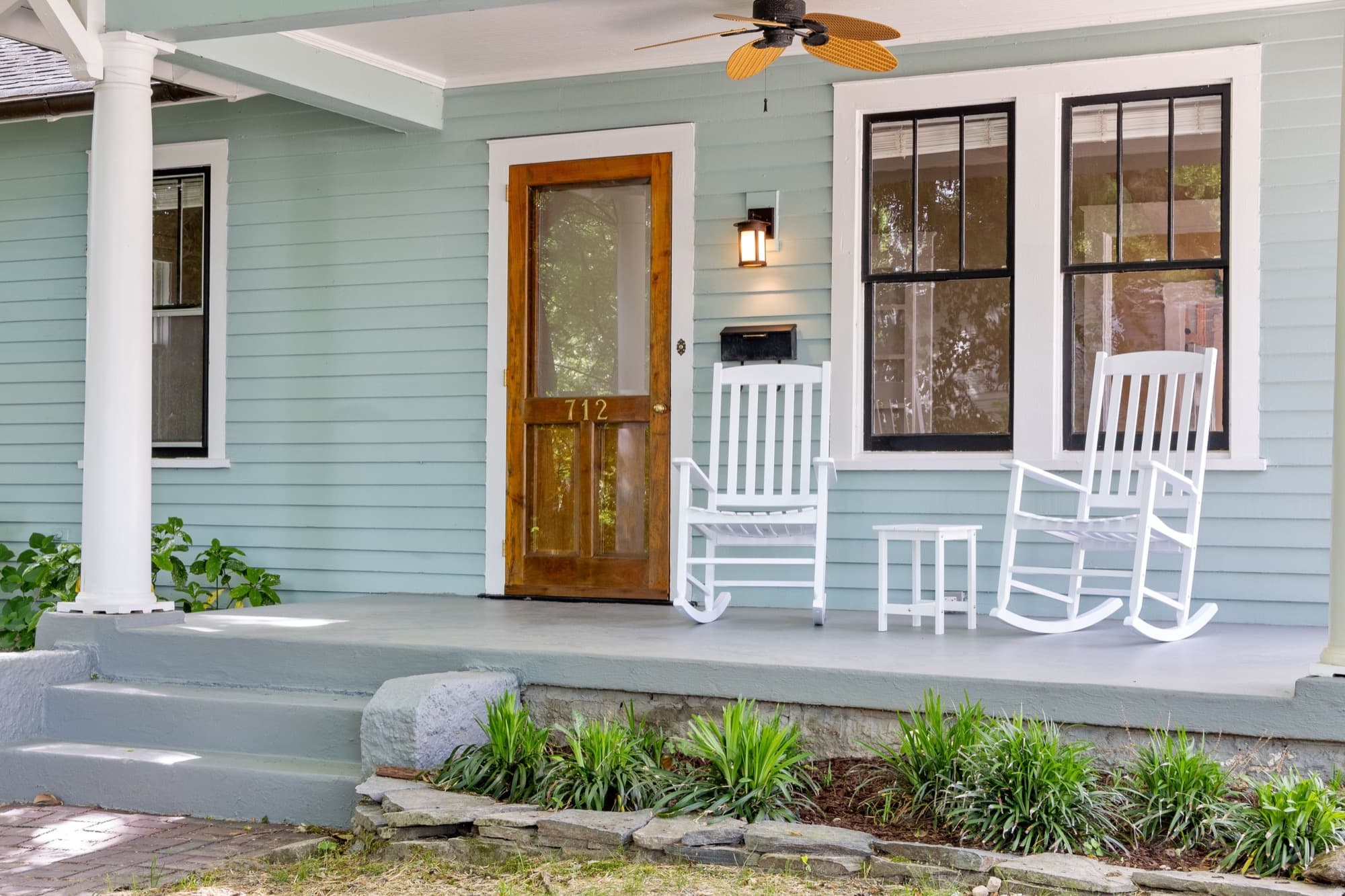
Earl Pruitt did not think of himself as a man with a title problem. He thought of himself as a man refinancing his house, which is a thing people do on purpose, with paperwork, in the reasonable expectation that the paperwork will be about interest rates.
The house had been his and Loretta's for a little over twenty years. They had bought it together, signed where the closing attorney pointed, and gone home to it. Loretta had died two summers ago. She had not left a will, because she had not expected to need one, which is the same reason most people do not have one. Earl had grieved, kept the house, and, this spring, decided a lower payment would be nice.
Then his loan officer called. This is rarely a call about interest rates.
The two words
The loan officer had sent the deed out for a title search, and the title search had come back with a finding. The deed to the Pruitt house named Earl and Loretta. It did not say "with right of survivorship." It did not say anything to that effect. It simply named them both and stopped, in the manner of a document that considers its work done.
In Alabama, that matters enormously, and it matters in a way almost nobody knows about until a title examiner tells them. Alabama Code section 35-4-7 says that when two people own land together and one of them dies, the dead owner's share does not pass to the survivor. It "descends and vests" as if it had been split off, which is to say it goes into the dead owner's estate. The statute then offers an exception: if the deed says the tenancy is "with right of survivorship," or uses other words showing that intent, the survivor takes the whole thing.
So the entire question of who owned the Pruitt house came down to whether a closing attorney in 2005 had typed four extra words on a form. He had not. Nobody had asked him to. Earl and Loretta had certainly not known to ask, because the idea that a married couple's house might not go to the widower is the sort of idea that does not occur to anyone who is not, professionally, in the business of having it occur to them.
Where half a house goes when nobody is looking
Loretta's half of the house, then, went into Loretta's estate, and Loretta's estate went where the law sends the estates of people who die without wills. This is called intestacy, a word that sounds like a medical condition and behaves like one.
Under Alabama Code section 43-8-41, a surviving spouse's share of an intestate estate depends on who else is standing around. If the person who died had children, and all of those children were also the survivor's children, the spouse takes the first fifty thousand dollars and half of what is left. But if any of the children were from a previous marriage, the spouse takes half, and only half. The other half goes to the children.
Loretta had grown children from her first marriage. Earl had not seen them in years. They had, as far as he was concerned, nothing whatever to do with his house.
The law disagreed. It had, in fact, disagreed for two years, quietly, without informing anyone, in the way the law generally does. Earl had been living in a house of which he owned three quarters, and Loretta's children owned the other quarter, and none of the four of them knew it.
There are some softening provisions. Alabama gives a surviving spouse a homestead allowance of fifteen thousand dollars, exempt property of up to seventy-five hundred dollars, and a family allowance for the year of administration, all of which come out of the estate ahead of everyone else. On a house with modest equity those allowances can absorb most or all of what would otherwise go down the other line. But the allowances are not self-executing. Somebody has to open an estate, ask the probate court for them, and get an order. The equity does not rearrange itself.
Why the bank would not simply take Earl's word for it
This is the part that felt, to Earl, like an elaborate practical joke. He lived in the house. He paid the mortgage. His name was on the deed. What, precisely, was the problem?
The problem is that a title insurer does not insure what is probably true. It insures what the public record says, and the public record said that a quarter of the Pruitt house belonged to people who had never been told. A refinance is a new mortgage, and a lender wants a mortgage on the whole house, signed by everyone who owns any of it. Earl could sign for his three quarters. He could not sign for anyone else's.
Which left him with three options, each of which he found, in turn, unbelievable.
Three ways out, one of which is a door
Open Loretta's estate. File in probate court, give notice to her children, ask the court for the homestead and family allowances, and get an order that says what her half was worth and where it went. If the equity was small enough, the order might well say that all of it went to Earl. Cost: a filing fee, a lawyer, and something close to a year. Result: a clean title and a refinance.
Get deeds from the children. If Loretta's children were willing to sign a deed giving their share to Earl, the estate could still be a formality. This depends entirely on the children, which is the difficulty, since the children may be strangers, or estranged, or the sort of relative who becomes a great deal more interested in a quarter of a house once someone puts it in writing.
Do nothing. Live in the house, pay the mortgage, and leave the problem for the next generation. This works, in the sense that the roof stays on. It also means no refinance, and it means that every dollar of equity Earl adds to the house from now on is a dollar of which a quarter belongs to someone else. Doing nothing is a plan. It is just an expensive one, paid on a delay.
What would have prevented all of it
Any one of three things.
The two words on the deed. "With right of survivorship," or "as joint tenants with right of survivorship," typed into the original deed, and Loretta's half would have gone to Earl on the day she died, with no court and no estate. A deed can also be re-recorded later to add the words, while both owners are alive to sign it.
A will. Loretta could have left her half to Earl. Her estate would still have needed to be opened to prove the will, but the outcome would have been hers to choose rather than the statute's to assign.
A trust. If the house had been deeded into a revocable trust, there would have been no estate at all, because the trust, not Loretta, would have owned it.
Earl and Loretta had none of the three, for the entirely ordinary reason that no one had ever mentioned any of them. The closing was about the house. The deed was a form. The form did its job, which was to transfer the property, and was silent on what should happen afterward, and the law, as it does whenever a document is silent, filled in the blank with a default that suited nobody in the room.
The moral, such as it is
If you own real estate with anyone, pull the deed. It is a public record and the probate office will give you a copy for a few dollars. Read the part after your names. If it does not say "with right of survivorship," then what you own is a share, and what happens to the other share when its owner dies is not up to you.
The fix, while everyone is alive, is a short document and an afternoon. The fix afterward is a year in probate court and a conversation with people who, until that moment, had no idea they owned part of your kitchen.
Questions about your own situation?
Fifteen minutes on the phone, no charge, and no obligation afterward.